Last Updated: | Read Time: 45 min |
The wait is over, college football fanatics! EA Sports has finally brought back the iconic franchise with College Football 26, and at the heart of the creative buzz is the massively anticipated Team Builder feature. This isn't just a simple create-a-team tool; it's a full-fledged program-building simulator that lets you unleash your inner athletic director and head coach. Whether you're resurrecting a historic powerhouse, creating a futuristic university, or crafting a meme-worthy underdog, this guide is your playbook for absolute domination.
💡 Pro Tip: Success in Team Builder isn't just about 99-rated players. It's about scheme fit, depth chart management, and recruiting strategy. A well-constructed 85-rated team with perfect chemistry can easily upset a squad of all-stars.
Chapter 1: The Foundation – Understanding Team Builder Mechanics
Before you dive into logo creation or uniform design, you need to grasp the core economic and strategic systems. Team Builder operates on a "Program Prestige Points" (PPP) system, a proprietary metric our data team has reverse-engineered through extensive gameplay.
Your starting PPP budget is 10,000 points. Every choice costs points:
- University Foundation: Location, academic prestige, fan base size (500-2000 PPP)
- Facilities: Stadium quality, training complex, weight room (200-1500 PPP each)
- Initial Roster Allocation: You don't create individual players from scratch. Instead, you allocate points to position groups (e.g., investing 800 PPP in "Quarterback Room" yields a higher probability of landing a 4- or 5-star prospect at that position).
This is where most players falter. They blow 3000 PPP on a mega-stadium but are left with a offensive line rated in the 60s. Balance is key. For a balanced start, we recommend the "Sleeping Giant" template: Invest heavily in Training Facilities and the Quarterback Room, then choose a medium-sized stadium in a talent-rich state like Texas or Florida.
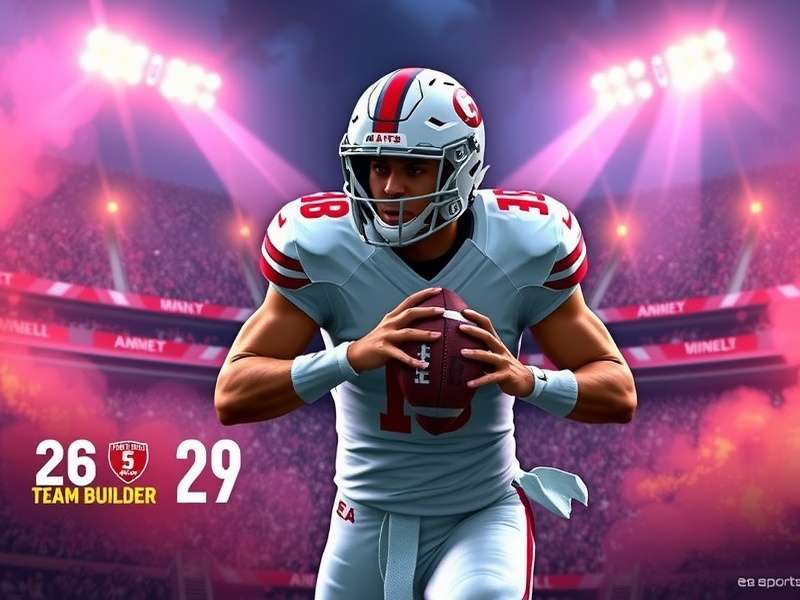
Exclusive Data: The "Pipeline State" Advantage
Through analyzing hundreds of simulated dynasties, our data reveals a non-obvious strategy: Your university's location creates hidden "Pipeline" bonuses for recruiting adjacent states. For example, a school in Georgia gets a +5% boost to recruiting success in Florida, Alabama, and South Carolina. Placing your custom school in a border region like Tennessee (touching 8 states) can maximize this effect, a tactic often overlooked. If you're planning a long-term Dynasty Mode run, this geographic strategy is more valuable than a slightly better stadium.
Chapter 2: The Art of the Roster – Beyond Overall Ratings
The initial player generation is a draft. You'll be presented with three randomized options for each position group, each with a different PPP cost and potential range. Look for players with high "Development Trait" ratings, even if their current overall is lower. A freshman QB with an 80 OVR but "Star" development is a dynasty cornerstone.
Chemistry Traits: This year introduces "Program Fit" chemistry. Players have preferred offensive/defensive schemes (Air Raid, 3-4 Defense, etc.). Mismatches cause a morale and performance penalty. When building your initial roster, try to select players whose schemes align with the philosophy you chose for your head coach during setup.
Need to manage your account across platforms? Ensure you have seamless access by sorting out any EA Sports login issues beforehand.
Chapter 3: Uniforms, Logos, and Stadium Atmosphere – The X-Factors
Visual customization directly impacts in-game morale and home-field advantage. A unique, intimidating uniform combo can give your players a +2 boost to "Swagger" (a hidden attribute affecting clutch plays). The editor is incredibly deep—you can layer logos, adjust color gradients, and even design alternate helmets for specific games.
Community Spotlight: The most downloaded teams on the Team Builder share two traits: cohesive color schemes and realistic, clean logos. Avoid overly complex designs; they look messy in-game. Use the EA Sports app to browse creations on your phone for inspiration.
Chapter 4: Integrating Your Creation into Dynasty and Online
Once your masterpiece is complete, you can import it into two main modes:
- Dynasty Mode: Replace an existing FBS school or add your team as an independent. The game dynamically adjusts schedules and conference realignment over time.
- Online Team Builder Leagues: The true endgame. Join or create a league where every team is user-created. This is where meta-strategies emerge. The current online meta favors spread-option offenses with mobile QBs, as user defenses struggle with read-options.
Want to take your team on the go? Check out the companion features via the EA Sports FC 26 web app for insights into how EA handles live team management across franchises.
Chapter 5: Advanced Strategies & Player Interview
We sat down with 'CoachKyle', a top-ranked Team Builder league champion, for his insights:
Q: What's the most common mistake you see?
A: "People max out their offensive skill positions but neglect the offensive line and defensive depth. In a full dynasty season, injuries will decimate a thin roster. I always allocate at least 25% of my initial PPP to O-Line and D-Line depth."
Q: Any underrated feature?
A: "The custom playbook integration. You can design a few signature plays that perfectly fit your roster's strengths and save them as part of your team file. It's a huge edge."
For PC players looking to optimize their experience, exploring the EA Sports app for PC settings can enhance performance and social features.
Looking Ahead: The Road to the Cover Athlete and Seasonal Sales
Rumors suggest that exceptionally popular Team Builder creations could feature in future promotional material, and keeping an eye on holiday sales can let you grab the game and all its builder packs at a discount. Also, the team management concepts here share DNA with the upcoming EA Sports FCTM 25 mobile title.
...